
Call us now :08045801103
 Send Inquiry
 Send Inquiry
Inductive Proximity Switches
Price 550 INR/ Piece
MOQ : 10 Pieces
Inductive Proximity Switches Specification
- Sensor Type
- PROXIMITY SWITCHES
- Current
- 300AMP Ampere (amp)
- Product Type
- PROXIMITY SWITCHES
- Operating Temperature
- -5-75 Celsius (oC)
- Working Temperature
- -5-75 Celsius (oC)
- Application
- MEATAL INTDUSTRIES USED
- Warranty
- 1 YEAR MANUFACTURING
Inductive Proximity Switches Trade Information
- Minimum Order Quantity
- 10 Pieces
- Supply Ability
- 50 Pieces Per Day
- Sample Available
- Yes
- Sample Policy
- Contact us for information regarding our sample policy
- Packaging Details
- International norms. Each piece is packed in separate bubble polythene bag and then in individual corrugated box. As per
- Main Domestic Market
- All India
- Certifications
- CE APPROVED
About Inductive Proximity Switches
Inductive Proximity Switch --Pe-In-8.0-18-P1-50-Nf
- Size : M-18X50
- Type : Pnp
- Output Logic : No
- Operating Voltage : 5-40 Vdc
- Max. Load Curren : 300 Mamp.
- Sensing Distance : 8.0Mm For Standard Object Size
- Switching Frequency : 250 Hz.
- Voltage Drop At Full Load : 2.5 Vdc
- No Load Current : >10.0 Mamp.
- Residual Current : 0.001 Mamp.
- Position Indication : Led
- Cable : 3 Core Pvc & Pu Flexible
- H.V. Test : 1.5 Kv For 1 Sec.
- Ambient Temp. : 700 C
- Enclosure : Nickel Platted Brass Tube
- Probe Size : M-18X50
- Mounting : Non Flush Type
- Protection Grade : Ip-67
- Approvals : Ce
- Standard object Size : 20X20X1 Mm
The Proximity Switches Dc Type Are Available In Pnp / Npn Type And Logic Available No / Nc & No+Nc, 2 Wire , 3Wire And 4 Wire.
Working Principal
An Inductive Alternating R.F. Field Is Developed At The Front Of The Sensing Surface Of The Proximity Switch. This Field Is Generated By The Resonant Circuit Coil Of The Oscillator.
Energy Is Absorbed When A Metal Piece Is Brought Into The R.F. Field Near The Sensing Surface, Causing Oscillation To Stop. Hence The Demodulated Voltage Feeding The Trigger Disappears.
For Dc Switches
The Trigger Operates Rapidly When Oscillation Stops And This Trigger Switches The Output Transister, Which Can Be Either Npn Or Pnp To Drive An Electronic Circuit Or Relay.
For Ac Switches
A Thyristor Is Triggered When Oscillation Stops Due To The Presence Of Metal . This Thyristor Is Connected In Series With A Bridge And This Series Combination Is Connected To The Ac Load.
Advantages Of Proximity Switches
- These Switches Can Be Used Anywhere Where Extreme Conditions Exist, E.G.
- With Lubricants And Cutting Oils
- Under Vibration
- Environments Where Water And Steam Are Present
- Dusty Environments, Etc.
Inductive Proximity Switches Or Sensors Are Primarily Used When The Object To Be Sensed Is Metallic, That Is Inductive Proximity Switches Are Used To Detect The Position Of Metals (Any Type). Some Applications Of Inductive Proximity Switches Are Machine Tools, Textile, Sugar, Cement, Automobile Industries And Many More.
High Performance in Demanding Environments
These proximity switches excel in harsh metal industry conditions due to their wide operating temperature range from -5C to 75C and robust build. Their reliability minimizes downtime and supports continuous operation of critical processes.
Safe and Efficient Non-Contact Sensing
Utilizing inductive technology, these switches detect metal objects without physical contact, reducing wear and tear on components. Their high current tolerance ensures safe and efficient integration into heavy-duty industrial systems.
FAQs of Inductive Proximity Switches:
Q: How do Inductive Proximity Switches work in metal industry applications?
A: Inductive Proximity Switches detect metallic objects without contact by generating an electromagnetic field. When a metal object enters this field, the switch activates, making them ideal for automation and safety in metal manufacturing processes.Q: What are the benefits of using these switches with a current rating of 300AMP?
A: A 300AMP current rating ensures that these switches handle high-power industrial equipment safely, minimizing risks of overload and offering compatibility with robust machinery typically found in metal industries.Q: When should these proximity switches be installed in industrial workflows?
A: Install these proximity switches during system setup or maintenance periods, especially when upgrading or automating metal processing lines to enhance detection accuracy and operational reliability.Q: Where can the switches be sourced from?
A: The switches can be sourced directly from manufacturers, exporters, suppliers, and wholesalers based in India, allowing buyers to access quality products backed by a 1-year manufacturing warranty.Q: What is the recommended process for integrating these sensors into existing equipment?
A: Integration involves securely mounting the switches at critical detection points, wiring them according to the provided schematic, and calibrating the sensor for the specific metal object sizes encountered in your workflow.Q: In what ways does the 1-year warranty benefit customers?
A: The 1-year manufacturing warranty assures buyers of product reliability, covering any defects or malfunctions within the warranty period. This reduces maintenance costs and instills confidence in industrial operations.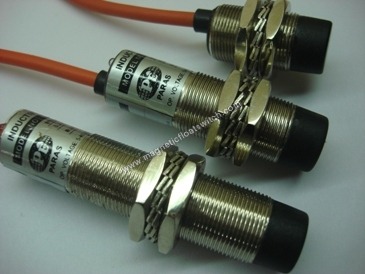

Tell us about your requirement

Price:
Quantity
Select Unit
- 50
- 100
- 200
- 250
- 500
- 1000+
Additional detail
Mobile number
Email

More Products in Inductive Proximity Switches DC Type Category
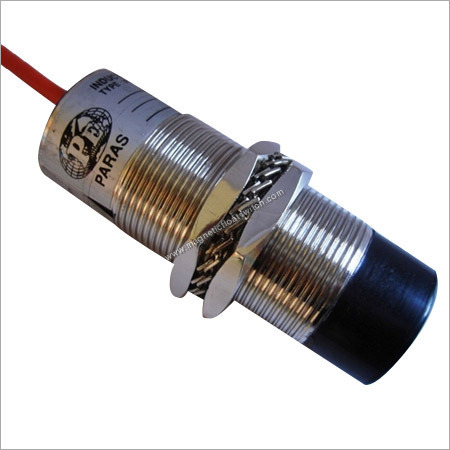
Inductive Proximity Switch
Price 550 INR / Piece
Minimum Order Quantity : 10 Pieces
Warranty : 1 YEAR MANUFACTURING
Product Type : Inductive Proximity Sensor
Working Temperature : 575 Celsius (oC)
Operating Temperature : 575 Celsius (oC)
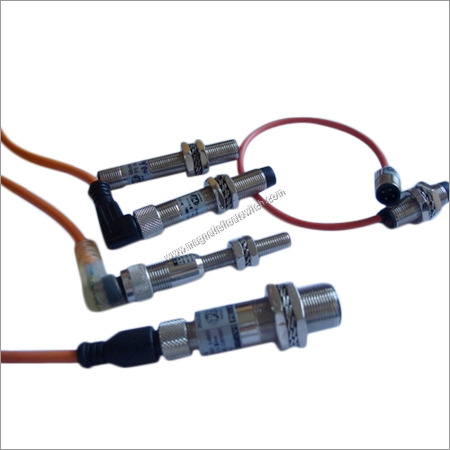
Inductive Proximity Switch Connector type
Price 495 INR / Piece
Minimum Order Quantity : 10 Pieces
Warranty : 1 YEAR MANUFACTURING
Product Type : PROXIMITY SWITCHES
Working Temperature : 575 Celsius (oC)
Operating Temperature : 575 Celsius (oC)
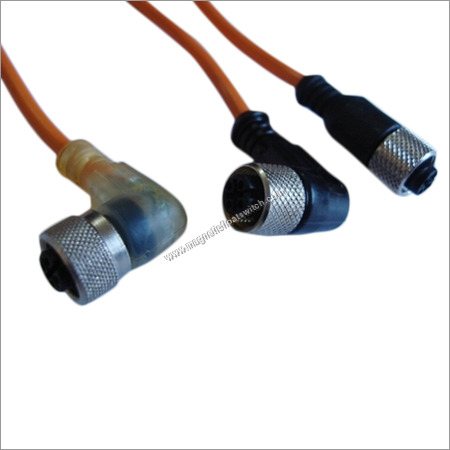
Connecting Cables for Connector type sensors
Price 495 INR / Piece
Minimum Order Quantity : 10
Warranty : 1 YEAR MANUFACTURING
Product Type : CONNECTING CABLE
Working Temperature : 575 Celsius (oC)
Operating Temperature : 575 Celsius (oC)

We are accepting bulk order quantity only.
 Send Inquiry
Our Products
- Inductive Proximity Switches DC Type
- DC to DC Converter
- SMPS Power Supply
- Power Pack & Relay Cards
- Magnetic Coil
- Magnetic Door Sensor
- Inductive Proximity Sensor AC Type
- Timer
- Capacitive Proximity Switches
- Inductive Proximity Switches AC Type
- Inductive Proximity Switches Rectangular
- Inductive Proximity Switches Special Type
- Intrinsically Safe Proximity Switch
- Magnetic Float Switches
- Magnetic Proximity Switches
- Magnetic Switches For Security Systems
- Photoelectric Proximity Sensors
- Flow Switches

Plot No. 65, 2nd Floor, Phase-II, Badli Industrial Area, Delhi - 110042, India

Mr Sandeep Kumar Jain
(Managing Director)
Mobile :08045801103
 Send Inquiry
 Send SMS
Developed and Managed by Infocom Network Private Limited.
